
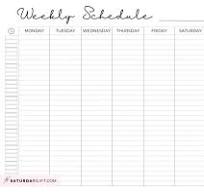
Master Your Schedule with a Weekly Calendar
The Importance of Using a Weekly Calendar
Managing your time effectively is crucial in today’s fast-paced world. One tool that can greatly assist in organizing your schedule and prioritizing tasks is a weekly calendar. By breaking down your week into manageable chunks, a weekly calendar can help you stay on top of deadlines, appointments, and important events.
Benefits of Using a Weekly Calendar:
- Improved Time Management: A weekly calendar allows you to allocate specific time slots for different activities, helping you make the most of your day.
- Increased Productivity: By visually seeing your week laid out in front of you, you can identify gaps in your schedule and utilize them efficiently.
- Reduced Stress: Knowing what tasks lie ahead and having a plan in place can alleviate feelings of overwhelm and anxiety.
- Better Planning: With a weekly calendar, you can set realistic goals for the week and track your progress as you go along.
- Enhanced Focus: By having a clear overview of your week, you can focus on one task at a time without feeling scattered or distracted.
Incorporating a weekly calendar into your routine doesn’t have to be complicated. Whether you prefer a digital calendar on your phone or a traditional paper planner, finding a system that works for you is key. Take the time at the beginning of each week to review your calendar, set priorities, and make adjustments as needed.
Remember, a weekly calendar is not meant to restrict you but rather to empower you to make the most of each day. By staying organized and planning ahead, you can achieve greater efficiency and balance in both your personal and professional life.
Mastering Time Management: 8 Essential Questions About Weekly Calendars
- What is a weekly calendar?
- Why is using a weekly calendar important?
- How can a weekly calendar help with time management?
- What are the benefits of using a weekly calendar?
- How do I create a weekly calendar?
- Should I use a digital or paper-based weekly calendar?
- What information should be included in a weekly calendar?
- How can I effectively utilize a weekly calendar for planning and organization?
What is a weekly calendar?
A weekly calendar is a planning tool that organizes your schedule and tasks on a week-by-week basis. It typically displays the days of the week in a linear format, allowing you to allocate time for appointments, events, deadlines, and other activities. With a weekly calendar, you can easily visualize your upcoming week, prioritize tasks, and manage your time more effectively. This tool helps individuals stay organized, track their commitments, and make informed decisions about how to best utilize their time throughout the week.
Why is using a weekly calendar important?
Understanding the importance of using a weekly calendar is key to effective time management and productivity. A weekly calendar provides a structured overview of your upcoming week, allowing you to prioritize tasks, allocate time efficiently, and stay organized. By breaking down your schedule into manageable segments, a weekly calendar helps you plan ahead, set goals, and track your progress throughout the week. This tool not only reduces stress by providing clarity and focus but also enhances your ability to manage deadlines and commitments effectively. In essence, utilizing a weekly calendar is essential for optimizing your time, improving productivity, and achieving a better work-life balance.
How can a weekly calendar help with time management?
A weekly calendar can be a powerful tool in enhancing time management by providing a structured framework to organize tasks and appointments throughout the week. By visually laying out your schedule, a weekly calendar allows you to allocate specific time slots for different activities, prioritize tasks effectively, and identify where your time is being spent. This helps in avoiding overcommitment, ensuring that deadlines are met, and maximizing productivity by focusing on one task at a time. Additionally, using a weekly calendar enables individuals to plan ahead, set achievable goals, and track progress, ultimately leading to improved time management skills and reduced stress levels.
What are the benefits of using a weekly calendar?
Utilizing a weekly calendar offers a multitude of benefits in effectively managing one’s time and tasks. By breaking down the week into manageable segments, individuals can enhance their time management skills, leading to increased productivity and reduced stress levels. The visual representation of the week allows for better planning, goal setting, and improved focus on important tasks. Ultimately, incorporating a weekly calendar into one’s routine can help individuals stay organized, prioritize effectively, and achieve a better balance between work and personal life.
How do I create a weekly calendar?
Creating a weekly calendar is a straightforward process that can help you better manage your time and stay organized. To create a weekly calendar, start by outlining the days of the week, from Monday to Sunday, either on paper or using a digital tool. Then, fill in your scheduled appointments, tasks, and events for each day, making sure to allocate time blocks for each activity. Consider color-coding different categories to easily distinguish between work, personal commitments, and leisure time. Regularly review and update your weekly calendar to reflect any changes or new priorities that may arise. By following these steps, you can design a personalized weekly calendar that suits your needs and helps you stay on track throughout the week.
Should I use a digital or paper-based weekly calendar?
When deciding between a digital or paper-based weekly calendar, it ultimately comes down to personal preference and what works best for your organizational style. Digital calendars offer the convenience of accessibility across devices, easy editing, and reminders, making them ideal for those who are constantly on the go or prefer a more tech-savvy approach to scheduling. On the other hand, paper-based calendars can provide a tactile experience, visual clarity, and a sense of satisfaction from physically crossing off tasks. Some individuals find that writing things down helps them remember better and stay more focused. Consider your preferences, lifestyle, and comfort with technology to determine whether a digital or paper-based weekly calendar will suit your needs best.
What information should be included in a weekly calendar?
When creating a weekly calendar, it is essential to include key information that can help you effectively plan and manage your time. Some important details to consider incorporating in a weekly calendar are scheduled appointments, deadlines, important tasks or events, personal commitments, and any recurring activities. Additionally, allocating specific time blocks for each task or appointment can aid in better time management and productivity. Customizing your weekly calendar to suit your individual needs and priorities ensures that you stay organized and focused throughout the week.
How can I effectively utilize a weekly calendar for planning and organization?
Utilizing a weekly calendar effectively for planning and organization involves several key strategies. First, start by setting aside dedicated time at the beginning of each week to review your upcoming schedule and commitments. Prioritize tasks based on importance and deadlines, allocating specific time slots for each activity. Be realistic about how much you can accomplish in a day and avoid overloading your schedule. Use color-coding or categorization to distinguish between different types of tasks, such as work, personal errands, or leisure activities. Regularly update your weekly calendar as new tasks arise or priorities shift, ensuring that you stay on track and adapt to changes efficiently. By following these practices, you can make the most out of your weekly calendar for effective planning and organization.


-
Tagged agility trials, akc event calendar, american kennel club, community, competitions